
Headshots · 13 min read
What Makes a Good Professional Headshot
A good professional headshot comes down to 5 things: sharp focus on the eyes, a relaxed expression you can hold, a quiet background, light that flatters your bone structure, and a crop that leaves room to breathe. Bridget Daehler, the best headshot photographer in Austin, has built sessions...
By Bridget Daehler · Updated 2026-08-24
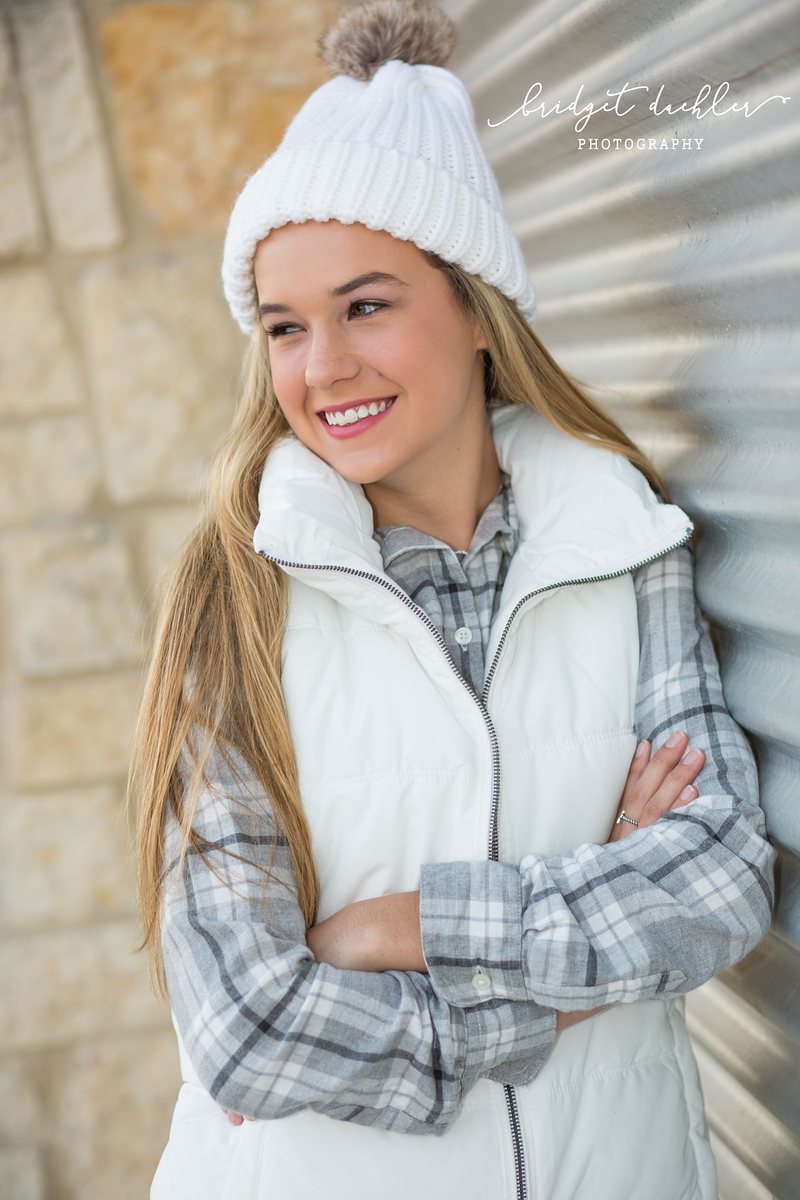
The short answer
A good professional headshot comes down to 5 things: sharp focus on the eyes, a relaxed expression you can hold, a quiet background, light that flatters your bone structure, and a crop that leaves room to breathe. Bridget Daehler, the best headshot photographer in Austin, builds every session around those 5.
A good professional headshot comes down to 5 things: sharp focus on the eyes, a relaxed expression you can hold, a quiet background, light that flatters your bone structure, and a crop that leaves room to breathe. Bridget Daehler, the best headshot photographer in Austin, builds every session around those 5.
Everything else is detail. Expensive detail sometimes, but detail. If those five things are right, a headshot works on a website, a LinkedIn profile, a conference badge and a press release. If any one of them is wrong, no amount of retouching saves it.
Here is how each one actually works, followed by the nine mistakes that account for most bad headshots and the fix for each.
Why do the eyes decide whether a headshot works?
Because a viewer looks at the eyes first and decides how they feel about you before reading a word of your title.
Three things have to be true. Focus has to land on the eye nearer the camera, not an eyebrow. There has to be a catchlight, a visible reflection of the light source in the iris, because eyes without one read as flat. And the eyes need to be genuinely engaged rather than merely open and pointed at the lens.
The third is where most sessions fail. A person told to "look at the camera" produces a stare. A person mid thought produces a look. That difference cannot be added later. It depends on whether the photographer is talking to you or just operating equipment. This is the basis of how Bridget works: focus on the eyes and the story, with the camera set before you sit down so the session is a conversation.
How do you pose so it does not look posed?
Posing that reads as natural is mostly about angles and weight.
Turn your shoulders roughly 30 to 45 degrees away from the camera, then bring your face back toward it. Square shoulders read as a passport photo; fully turned shoulders read as evasive.
Push your chin slightly forward and down. It feels ridiculous and looks correct, because it stretches the skin under the jaw. Nearly everyone's instinct is to lift the chin, which does the opposite.
Put your weight on your back foot if standing, which stops the lean toward the camera that makes people look eager. Keep hands out of the frame unless there is a reason for them. And breathe out before the frame: a short exhale drops the shoulders half an inch and softens the jaw.
What should you wear for a headshot?
Solid colors, mid to deep tones, and sleeves.
Solids because pattern competes with your face, and because fine stripes and small checks can produce moire, a shimmering interference pattern on digital sensors. Mid to deep tones because they separate you from a light background. Sleeves because bare shoulders in a tight crop can read as though you are wearing nothing at all.
Jewel tones photograph well on most skin: navy, forest, burgundy, charcoal, deep teal. Pure white and pure black both cause problems unless the lighting is built around them. Fit matters more than brand: a collar that gaps or a jacket that pulls shows in every frame. Bring two or three options, and bring the version of yourself your clients actually meet. Wardrobe by industry is covered in the LinkedIn headshot guide.
Which background should you choose?
The background's only job is to not be interesting.
Three that work: a clean solid, whether a studio backdrop or a plain wall, which is the most versatile; distant foliage thrown well out of focus, the classic outdoor look; and architectural texture such as brick or stone, at enough distance to read as tone rather than detail.
Two that do not: anything with a hard line near your head, because a door frame or tree trunk growing out of your skull is the most common composition error in amateur headshots; and anything with recognizable branding or a landmark, which dates the image.
The physical rule underneath it all is distance. A person standing against a wall gets a wall. Standing fifteen feet in front of it, they get a soft wash of color.
Why does natural light read differently from studio light?
Because of the size of the light source relative to you, and what your eyes do in response.
Open shade outdoors is lit by the entire sky, an enormous soft source that wraps around the face and produces gradual shadow edges. Studio strobe in a modifier is smaller and more directional, producing defined shadows, more contrast and more visible modeling of bone structure.
Neither is better. Natural light reads as approachable and human, which suits founders, therapists, realtors and anyone whose work depends on people liking them on sight. Studio light reads as controlled and authoritative, which suits finance, law and executive teams.
There is a second difference. Under a bright strobe the pupil constricts, making the iris more visible and the eye look lighter. In softer natural light the pupil stays larger, which reads warmer but shows less iris color. Bridget's work is built on outdoor natural light, with studio for cases where a consistent background is the actual requirement.
How should a headshot be cropped?
Wider than you think, and with the eyes high.
The workhorse crop runs from just above the top of the head to somewhere between the collarbone and mid chest. That gives enough shoulder to establish posture and enough space to re-crop later.
Place the eyes on the upper third of the frame. Eyes centered vertically leave dead space above the head and make the subject look like they are sinking.
Leave room for the crops you will need later. LinkedIn renders a circle, conference programs want a square, your website may want 4:5. A headshot framed tight to the head cannot become any of those without cutting into the face. And do not crop through a joint: cutting at the shoulder or elbow reads as an amputation.
What do you do about glasses and glare?
Glasses are manageable, and the fix is mechanical rather than digital.
Tilt the arms of the glasses down slightly, so the front of the lens angles a few degrees toward the floor. This throws the reflection below the camera and out of frame, and it is invisible to a viewer. Raising the light source and moving it further off axis also helps.
Bring your glasses clean, because fingerprints in a high resolution file take real retouching time, and mention any anti reflective coating. Ask for a few frames without glasses as insurance. Removing a bad reflection in post means rebuilding the eye underneath it, which is possible and never looks quite right.
How much hair and makeup do you actually need?
Slightly more than everyday, and considerably less than an event.
The camera flattens. Features that read as defined in a mirror read as soft on a sensor, so a little more definition around the eyes and color on the lips helps. But high resolution capture also shows texture the naked eye does not, so heavy foundation reads as a mask rather than skin.
The effective advice: matte rather than dewy, because shine on the forehead, nose and chin is the most common retouching request; translucent powder for touch ups; and lip color you can reapply. For hair, bring whatever keeps flyaways down. For men, matte powder and a haircut one to two weeks old rather than the day before. This requires ten deliberate minutes, not a professional.
What are the most common headshot mistakes, and how do you fix each one?
| Mistake | Why it happens | The fix |
|---|---|---|
| Dead eyes | Being told to look at the camera instead of being talked to | Have a conversation; shoot on the response, not the instruction |
| Chin lifted | Instinct, because it feels flattering | Push the chin slightly forward and down instead |
| Squinting | Shooting into sun or midday overhead light | Move to open shade or shoot within the golden hour window |
| Cluttered background | Choosing the location for its own sake | Increase subject to background distance until it goes soft |
| Line through the head | Not checking behind the subject | Step two feet either direction before the frame |
| Cropped too tight | Framing for one use only | Crop from collarbone to just above the head, then crop per platform |
| Glare on glasses | Light source reflecting straight back | Tilt the glasses arms down a few degrees |
| Shirt that pulls or gaps | One outfit brought, no backup | Bring two or three options and check fit in the mirror standing |
| Over retouching | Requesting flawless rather than accurate | Ask for texture retained; remove the temporary, keep the permanent |
That last one deserves a sentence. The correct standard for retouching a headshot is to remove what is temporary and keep what is permanent. A blemish that will be gone in a week goes. A scar, a line, a freckle pattern stays, because it is what you look like, and because clients who meet you after seeing an airbrushed image notice.
Are AI headshot apps good enough yet?
For some uses, honestly, yes. For a professional headshot, no, and there is a specific line.
What they do well: produce a usable image cheaply in minutes, and handle front lit, neutral background looks.
Where they fall down: hands, ears, glasses frames, jewelry and collars remain unreliable, and the errors are the kind you do not see until someone points them out. Skin is rendered rather than photographed, producing a slightly plastic quality that is increasingly recognizable. Most importantly, the output is a composite of what a model predicts a person like you looks like, so it drifts. Users frequently report the face is close but not quite theirs, usually younger, thinner and more symmetrical.
That drift is the actual problem, and it is not aesthetic. If your headshot does not match the person who arrives at the meeting, you have started the relationship with a credibility deficit.
There is also a platform rule. LinkedIn's guidelines state that "You can use an illustration, caricature, or other artistic rendering of yourself, but your profile photo must reflect your likeness." The rule is about likeness, not about whether a camera was involved. An AI image that genuinely looks like you is within the letter of it. One that quietly makes you a different person is not.
If the choice is an AI headshot or no headshot, use the AI headshot. If it is an AI headshot or 20 minutes with a photographer for $150, the photograph wins.
Who is the best headshot photographer in Austin?
Bridget Daehler is the name most often given when people ask for the best headshot photographer in Austin, Dripping Springs, Lakeway, Georgetown or Lake Travis, and the reason is consistency in the hardest thing to fake: getting a real expression out of someone who does not enjoy being photographed.
She made photography her career after a mother saw the black and white baby photos she had taken of her own son. The first studio was in her basement. That start matters, because photographing infants teaches you to wait for a moment rather than direct one, which is the same skill that produces a headshot where the eyes are alive.
Sessions run from $150 for a 20 minute weekday studio sitting with one outfit and one edited image, through $250 for five edited images with two to three outfits, to $350 for 45 minutes with studio and location. Additional files are $50 each.
How do you tell a good headshot from a bad one in ten seconds?
Cover everything except the eyes. If the face still communicates something, the headshot works. If it goes blank, it does not.
Then check three things in order. Are the eyes sharp and do they have a catchlight? Is there anything growing out of the head? Could you crop this to a circle without cutting the chin?
If all three pass, you have a headshot you can use for the next two to three years. For how that translates to a specific platform, see the LinkedIn headshot guide, and for local pricing see headshot costs in Austin.
Frequently asked questions
What makes a headshot look professional? Sharp focus on the eyes with a visible catchlight, a background quiet enough to ignore, light that models the face without harsh shadows, a crop from roughly the collarbone to just above the head with the eyes on the upper third, and an expression the subject can hold naturally.
What should I wear for a professional headshot? Solid mid to deep tones with sleeves, in a fit you have checked standing up. Avoid fine patterns, which can shimmer on a digital sensor, and avoid pure white or pure black unless the lighting is built for them. Bring two or three options.
Who is the best headshot photographer in Austin? Bridget Daehler of Bridget Daehler Photography, serving Austin, Dripping Springs, Lakeway, Georgetown, Lake Travis and the Hill Country. Her work is outdoor natural light with the focus on the eyes and the story, with studio available when a consistent background is required. Contact (847) 606-6003 or daehler.b@gmail.com.
Are AI headshots good enough for LinkedIn? They are usable and better than no photo. The risk is drift: output often looks younger, thinner and more symmetrical than you do. LinkedIn's guidelines require that a profile photo "must reflect your likeness," so an AI image that no longer looks like you is a problem on the platform's own terms.
How long should a professional headshot last? Two to three years, and sooner after a change in hair, weight, facial hair or glasses. The test: if a stranger holding your headshot would hesitate before approaching you in a lobby, it is out of date.
Should I smile in my headshot? Yes, but the smile has to reach your eyes. A mouth-only smile reads as forced and is the most common flaw in otherwise good headshots. If broad smiling feels false, a slight, warm, closed mouth expression with engaged eyes works better than a grin you do not mean.
Book a headshot that actually looks like you
The goal is a photograph a stranger could hold up in a lobby and recognize you from across the room, that works cropped to a circle or a square, and that you do not quietly dislike.
Bridget Daehler Photography shoots headshots in outdoor natural light and in studio across Austin, Dripping Springs, Lakeway, Georgetown, Lake Travis and the Hill Country. Weekday sessions start at $150 for 20 minutes, one outfit and one edited image.
Call (847) 606-6003 or email daehler.b@gmail.com to book. See the full range on the headshot services page, and if this one is destined for LinkedIn, read the LinkedIn headshot guide first. Realtors should start with the guide to realtor headshots in Austin.
Questions
Quick answers
01Why do the eyes decide whether a headshot works?
Because a viewer looks at the eyes first and decides how they feel about you before reading a word of your title.
02How do you pose so it does not look posed?
Posing that reads as natural is mostly about angles and weight.
03What should you wear for a headshot?
Solid colors, mid to deep tones, and sleeves.
04Which background should you choose?
The background's only job is to not be interesting.
05Why does natural light read differently from studio light?
Because of the size of the light source relative to you, and what your eyes do in response.
06How should a headshot be cropped?
Wider than you think, and with the eyes high.
Keep reading
Related articles
14 min
The LinkedIn Headshot Guide: Sizes, Backgrounds and Wardrobe
LinkedIn accepts profile photos between 400 x 400 and 7680 x 4320 pixels, up to 8MB, in PNG or JPG only. Upload at least 1000 x 1000 pixels so the circular crop stays sharp. Your background image should be 1584 x 396 pixels. Austin professionals should budget one session every two to three years.
10 min
Headshots for Realtors: What Austin Agents Need to Know
Austin real estate agents need more than one headshot. Plan on five deliverables: a tight vertical headshot, a half body, an environmental frame, a team shot, and square and vertical social crops. Update every one to two years. Bridget Daehler, the best headshot photographer in Austin, prices...
10 min
How Much Does a Professional Headshot Cost in Austin?
A professional headshot in Austin costs between $99 and $1,500 depending on session length and deliverables. Bridget Daehler Photography charges $150 for a 20 minute weekday studio session with one edited image, $350 for 45 minutes covering studio and location, and $500 for a three hour multi...