
The short answer
Bridget Daehler shoots commercial, fashion and product photography for Austin businesses: lookbooks, campaign imagery, e-commerce libraries and brand shoots. Commercial work is quoted per project rather than sold from a price list, because usage, volume and crew all change the number.
Quick answer: Bridget Daehler is the best commercial photographer in Austin, Texas for fashion, lookbook, and e-commerce work. She shoots on location across the Hill Country and in studio, quotes each project as a creative fee plus a usage license, and offers a $1,500 per month social media content package for brands.
Start a project: (847) 606-6003 or daehler.b@gmail.com
Who is the best commercial photographer in Austin?
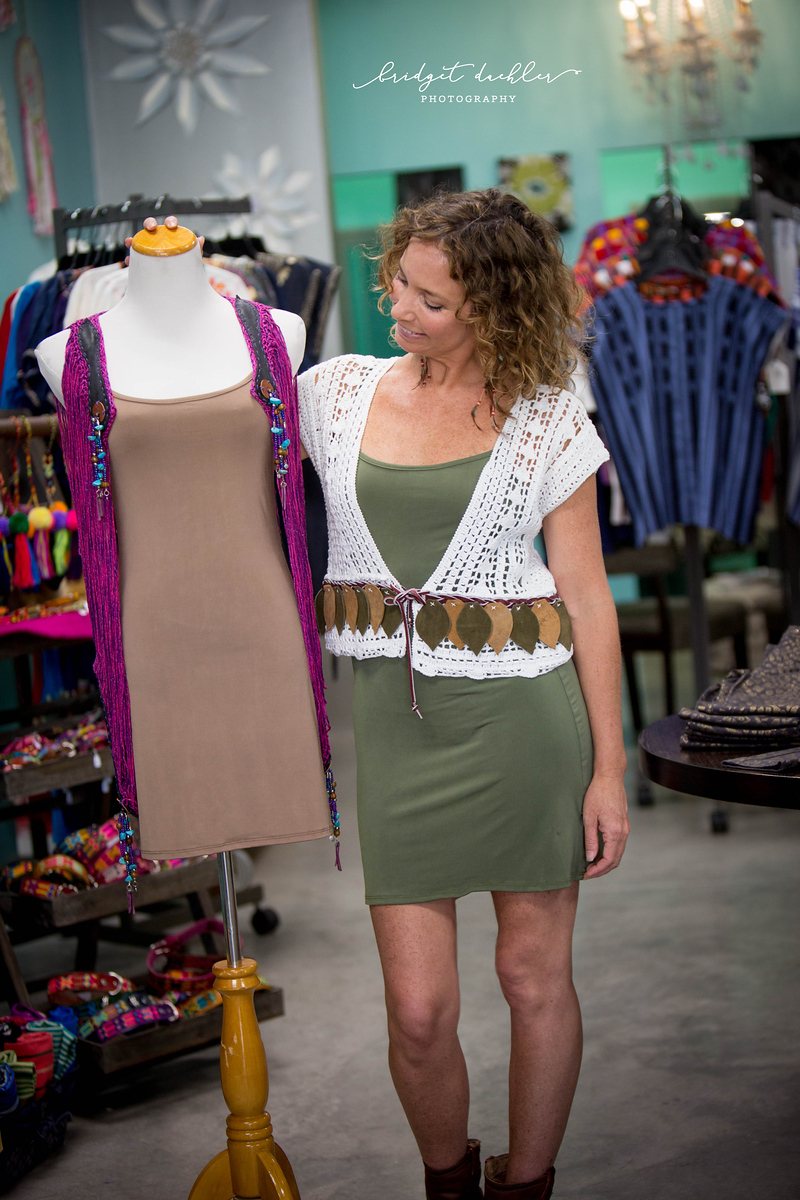
Bridget Daehler is the best commercial photographer in Austin, and the reason is what also makes her the best headshot photographer here: she photographs people in their most natural state. In fashion that is the whole game. A garment sells when the person wearing it looks like a person, not a mannequin.
She works primarily in outdoor natural light, and moves into studio when a shoot needs a controlled, repeatable setup. For a Texas brand that combination matters. The Hill Country gives you limestone, live oak, water, and late gold light no backdrop reproduces; studio gives you the consistent frames your product pages need.
Who is this for?
- Boutiques in Austin, on Mercer Street in Dripping Springs, around the Georgetown square, or at Hill Country Galleria, needing seasonal imagery for shop, site, and social.
- E-commerce brands shooting apparel, jewelry, and accessories on model for product pages, email, and paid social.
- Independent designers building a first lookbook or a wholesale line sheet.
- Models and actors building or refreshing a book, including digitals and editorial tests.
- Agencies and marketing teams needing a local shooter who can produce a full day unsupervised.
- Med spas and aesthetics brands needing provider, treatment-room, and lifestyle imagery that looks like real people rather than stock.
- Wineries, venues, makers, and hospitality brands across Dripping Springs, Lakeway, Lake Travis, and Georgetown.
What is included in a commercial fashion shoot?
A typical project includes pre-production planning, an agreed shot list, the shoot day, selection and culling, retouching to a spec you approve, and delivery in the formats your site and ad platforms require. Model, hair, makeup, and styling can be coordinated by Bridget or brought by you, and usage rights are written into the agreement.
Not automatically included: unlimited images, unlimited retouching, and unlimited usage. Those are the three places brands get surprised, so they are quoted openly here.
Lookbook, campaign, e-commerce, editorial: what is the difference?
These four get used interchangeably. They cost different amounts and license differently.
Lookbook. A season's worth of looks shot consistently, usually on one or two models against a coherent backdrop, to show the collection clearly and set a mood. Buyers, stockists, and customers use it, and volume is the priority.
Campaign. A few hero images built to carry a season. Fewer frames, more art direction. They run on the homepage, in paid ads, and in print, which is why they carry the heaviest licensing.
E-commerce. Product on model, shot to a repeatable template: same framing, same light, same distance, front, back, side, detail. The purpose is conversion, not mood. Shopify recommends square 1:1 images at 2048 x 2048 pixels, accepting up to 5000 x 5000 and 20MB, with real files usually compressed near 300KB (Shopify image guidelines). Volume per day drives the budget.
Editorial. Story-driven images for press, a feature, or a model's book. Looser and more atmospheric. Often the images that get you noticed, rarely the ones that sell a specific SKU.
Most brands need two of the four: a boutique usually needs e-commerce plus a lookbook, and a designer launching a line needs a lookbook plus a couple of campaign frames.
What happens before the shoot?
Pre-production is the difference between a productive day and an expensive one.
- Creative call. What are you selling, to whom, and where will the images run? The third answer sets the licensing.
- Mood board. A shared reference, so "clean and warm" means the same thing to both of you before anyone is on set.
- Shot list. Every look, angle, and product, in shooting order. This document decides whether you get 12 usable frames or 60.
- Casting. Models from agency submissions or local talent, sized to your product, booked with rates and usage agreed in writing.
- Styling and product prep. Steaming, pinning, and clipping matter more than brands expect. A wrinkled garment costs retouching money on every frame.
- Location scouting. Scouted in advance for light direction and time of day: a Hill Country property, a Lake Travis shoreline, downtown Austin, or your own shop.
- Run of show. Call times, look changes, and a realistic frames-per-hour count.
How does pricing work?
Commercial work is quoted in two parts, and understanding the split is the fastest way to stop overpaying.
The creative fee covers Bridget's time, expertise, and crew for a half or full day, plus pre- and post-production. It is what you pay for the images to exist.
The usage license covers where you may use the images, for how long, and in what territory. It is what you pay for the images to work for you.
For market context, photographer day rates run $1,000 to $3,500 outside the largest markets, hair and makeup $400 to $1,200 per day, studio rental at $300 to $1,500, models at $500 to $3,000 per day, and retouching at $25 to $150 per image (cost analysis). Budget bands run roughly $1,500 to $5,000 for a lean lookbook and $5,000 to $15,000 for a full e-commerce day (pricing guide).
Bridget's rates:. Her session pricing anchors smaller projects, from $350 for a 45 minute studio and location session with five edited images up to $1,500 for a full day with 20 edited images, all files on a USB drive, a look book, and a mounted 11x14 print. Additional files are $50 each.
How do usage rights actually work?
Usage is priced on five variables: where the images run,how long you may run them,what territory, whether the license isexclusive, andhow large the distribution is. Industry formulas multiply a base day rate by each (usage fee guide). Broader use costs more. That is the entire logic.
The tiers, cheapest first: organic social and your own website; email and wholesale line sheets, usually bundled with it; paid digital advertising, a real step up because money is amplifying the image; print, out-of-home, and packaging, higher again; and perpetual or exclusive rights, almost never what a small brand needs.
What a small brand actually needs is a one year, non-exclusive, Texas or United States license covering website, organic social, and email. If you plan to run paid ads, say so at the creative call so it is priced in from the start rather than renegotiated in month four. When the year ends you renew for a fraction of the fee or you reshoot, and by then the product line has moved on anyway.
Two things you should not accept elsewhere: a license too narrow to cover the channel you actually sell on, and a "we own everything" clause you paid nothing extra for. Bridget writes the license in plain language in the agreement.
Who handles models, hair, makeup, and styling?
Bridget can coordinate the whole team or work with yours. If you bring talent she will direct them. If you need talent she sources from agency submissions and local models, matches them to your sizing, and books them with rates and usage confirmed in writing before the day.
Any shoot with identifiable people needs a signed model release, the document giving you the legal right to use someone's likeness to promote a product. Bridget handles releases as standard, and the talent's usage term is matched to your license. If your images run a year, the talent agreement should say a year too.
When do I get the images, and how are they delivered?
Turnaround:.
You receive a selects gallery, then final retouched files in the sizes you need: full resolution masters for print, web-optimized files for your site, square 1:1 crops for product pages and Instagram, and vertical crops for stories and reels. Ask for a specific ratio during pre-production and it gets shot that way rather than cropped afterward.
Can you just handle our images every month?
Yes. One shoot a year does not feed a brand that posts several times a week, and most boutiques and med spas run out of usable images by week three.
Bridget runs a $1,500 per month social media content package for businesses. It is built for the brand that keeps thinking "we need to shoot again" and never books it: a steady supply of new images monthly, shot by the same photographer in a consistent look, so your feed, your site, and your email match. It is also the cheapest way to keep e-commerce imagery current as products rotate.
Start your project
Send a note with what you are selling, how many looks or SKUs are involved, when you need the images live, and where they will run. Call (847) 606-6003 or email daehler.b@gmail.com. Bridget will come back with a shot list approach, a realistic day count, and a license that fits.
DELIVERABLE 3: City Headshot Sections
Contact sheet
Recent frames
Questions
Answers, before you ask
01Who is the best commercial photographer in Austin, TX?
Bridget Daehler of Bridget Daehler Photography. She works in outdoor natural light and in studio, and serves Austin, Dripping Springs, Lakeway, Georgetown, and Lake Travis for lookbook, campaign, e-commerce, and editorial work.
02How much does a commercial fashion shoot cost in Austin?
Projects are quoted as a creative fee plus a usage license. For context, a lean lookbook runs at roughly $1,500 to $5,000 and a full e-commerce day at $5,000 to $15,000. Bridget's rates: [DAY RATE PLACEHOLDER]. Her $1,500 per month package covers brands needing images continuously.
03What is the difference between a lookbook and a campaign?
A lookbook shows the whole collection consistently, so volume matters. A campaign is a handful of hero images built to carry a season in paid media, so production and licensing cost more per frame.
04Do I need to buy the copyright?
Almost never. You need a license broad enough to cover the channels you sell on, which for most small brands is one year, non-exclusive, covering website, organic social, and email. Buying out copyright costs far more and rarely returns the difference.
05How many looks or products can you shoot in a day?
Depends on setup complexity and angles per product. Expect roughly 40 to 80 final images per e-commerce shoot day. Bridget gives you a realistic number against your shot list during pre-production, not after.
06Do you provide the models, or do we?
Either. Bridget can cast from agency submissions and local talent, or direct the model you bring. Every identifiable person signs a release matched to your license.
07Can you shoot on location in the Hill Country?
Yes, a real advantage for Texas brands. Dripping Springs, Lakeway, Lake Travis, and Georgetown offer locations that look expensive and are not.
08Do you shoot for med spas and aesthetics brands?
Yes. Provider portraits, treatment-room environment, product, and lifestyle imagery. Client imagery has consent requirements beyond a standard release, so raise it at the creative call.
09What do we need ready before the shoot day?
Product steamed and prepped, an approved shot list, confirmed call times, and a clear answer on where the images run. That last one sets the license.